
Bringing an animal companion into your home introduces a profound source of joy, unwavering loyalty, and deep emotional connection. Whether you share your living space with a high-energy dog, a quiet and affectionate cat, or any other beloved creature, the bond you build with them is entirely unique. However, alongside this immense joy comes a remarkably heavy responsibility. Because our pets cannot verbalize their discomfort, explicitly tell us when a physical change is occurring, or point to where it hurts, the burden of maintaining their health and keeping them safe from unseen environmental hazards falls entirely on the shoulders of the owner.
Unfortunately, a significant number of pet owners adopt a strictly reactive approach to their animal’s health. In this paradigm, action is only taken after a problem has become undeniably apparent. They wait for a noticeable limp, a severe change in eating habits, a visible physical injury, or a massive parasite infestation to take hold before seeking any kind of intervention. This reactive methodology is inherently flawed. Waiting until an illness is advanced or a crisis has erupted not only causes the animal prolonged and unnecessary suffering, but it also dramatically increases the financial burden of treatment. Minor, easily solvable issues compound over time into complex, systemic failures.
The most effective and compassionate way to care for an animal is to adopt a holistic, strictly proactive approach. This requires a dedicated mindset that bridges the gap between daily at-home maintenance, meticulously scheduled medical oversight, and a comprehensive, rapidly deployable crisis response plan. It means actively seeking out hidden dangers before they impact your companion and controlling their immediate environment with rigorous hygiene standards. By establishing a robust preventative care routine, preparing an actionable crisis plan before disaster strikes, and aggressively managing environmental parasites, owners can ensure their companions live long, comfortable, and vibrantly healthy lives.
Establish a Baseline for Preventative Health and Wellness
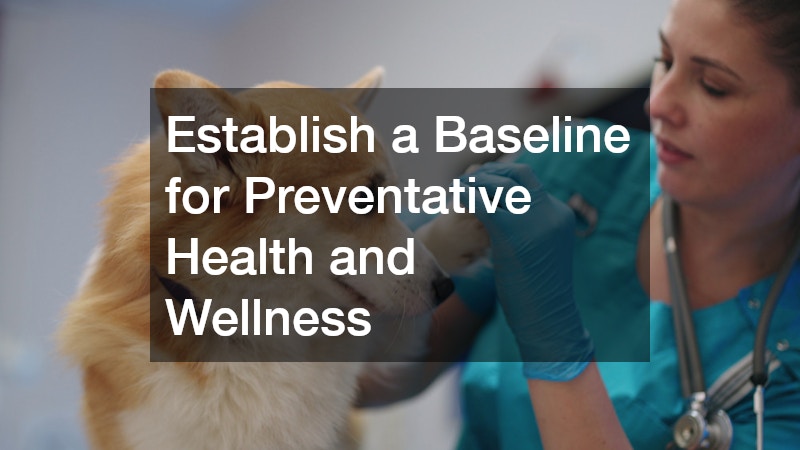
The foundation of any successful health strategy begins with understanding what “normal” looks like for your specific companion. Because animals are instinctively driven to hide signs of weakness or illness—an evolutionary survival mechanism—subtle changes in their physiology often go completely unnoticed by even the most attentive owners. Establishing a documented baseline for your pet’s preventative health is crucial, and it requires consistent, professional evaluation.
This process must begin with scheduling comprehensive, annual wellness examinations. During a standard physical exam, a medical professional evaluates far more than just the animal’s weight. They listen to the rhythm of the heart to detect early murmurs or arrhythmias, palpate the abdomen to check for abnormal masses or organ enlargement, examine the clarity of the lenses in the eyes, and evaluate the joints for early signs of osteoarthritis. Building a long-term relationship with trusted local veterinarians is incredibly advantageous here. When the same professional evaluates your companion year after year, they become intimately familiar with the animal’s unique medical history, behavioral quirks, and baseline vitals. This continuity of care makes it vastly easier to detect microscopic shifts in their health trajectory before those shifts escalate into major medical emergencies.
Beyond the physical exam, routine diagnostic testing is a vital component of preventative care. Yearly blood panels and urinalysis provide a window into the internal functioning of the liver, kidneys, and pancreas. Furthermore, keeping up with core vaccinations and microchipping is non-negotiable. Standard vet clinics are perfectly equipped to handle these vital preventative measures, administering vaccines that protect against highly contagious, devastating diseases such as parvovirus, distemper, and rabies. Regular visits also provide an opportunity to track your pet’s weight meticulously, as even a two-pound weight gain in a small animal can represent a massive increase in joint stress and metabolic strain.
Actionable Steps for Preventative Health:
-
Request comprehensive blood work: Do not wait for your pet to enter their senior years to request blood work; early panels establish a healthy baseline to compare against later in life.
-
Maintain a detailed health journal: Keep a physical folder or digital document containing your pet’s vaccination lot numbers, dates of service, and any minor behavioral changes you observe at home.
-
Monitor body condition scoring: Learn how to visually and physically assess your pet’s body condition score. You should be able to easily feel their ribs without applying heavy pressure, and they should have a visible waistline when viewed from above.
-
Bring samples to appointments: Always bring a fresh stool sample to your annual visit to check for intestinal parasites like roundworms, hookworms, and giardia, which can lay dormant without obvious symptoms.
-
Schedule bi-annual visits for seniors: Once your pet reaches their senior years (typically around age seven for large dogs and age ten for small dogs and cats), increase wellness visits to every six months to catch rapidly developing age-related conditions.
Maintain Oral Hygiene to Prevent Systemic Diseases
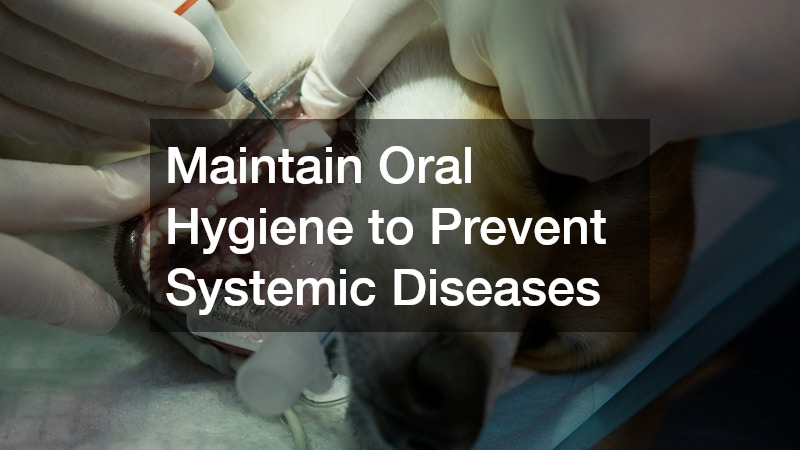
When discussing preventative health, one of the most frequently overlooked and misunderstood areas of care is oral hygiene. Many owners accept severe bad breath, discolored teeth, and red gums as a normal, unavoidable consequence of a pet aging. This is a dangerous misconception. Foul breath is not a natural state; it is the direct smell of decaying bacteria and active infection within the mouth. Ignoring oral hygiene does not just lead to tooth loss; it opens the door to severe systemic diseases that can drastically shorten your companion’s lifespan.
The process of dental decay begins exactly as it does in humans: with the accumulation of invisible plaque. If this plaque is not mechanically removed through brushing, minerals in the animal’s saliva harden it into porous calculus, or tartar. This hardened tartar acts as a scaffold for dangerous bacteria to breed and multiply. As the bacterial colonies grow, they push beneath the gum line, causing severe inflammation known as gingivitis. If left unchecked, this progresses into irreversible periodontal disease, which destroys the ligaments and bone supporting the teeth. Even more alarmingly, the inflamed, bleeding gums provide a direct superhighway for this bacteria to enter the animal’s bloodstream. Every time the pet chews, bacteria are pumped through the body, where they can permanently damage the filtration systems of the kidneys and latch onto the valves of the heart, causing fatal conditions like endocarditis.
To combat this, daily at-home intervention is required. Acclimating your pet to having their teeth brushed should begin as early as possible. However, brushing alone is often not enough to reverse years of neglect. You must schedule annual oral evaluations at specialized animal clinics equipped to handle comprehensive dental care. Unlike humans, animals will not hold still for a thorough subgingival cleaning. Therefore, seeking out professional pet dental services that include full-mouth dental x-rays and safe, anesthetized scaling and polishing is the only way to accurately assess damage below the gum line, safely extract rotting teeth, and restore the mouth to a healthy, pain-free state.
Actionable Steps for Oral Hygiene:
-
Use species-specific toothpaste: Never use human toothpaste on a dog or cat, as it contains fluoride and foaming agents that are toxic when swallowed. Use enzymatic toothpaste designed specifically to break down pet plaque.
-
Introduce brushing gradually: Start by simply massaging your pet’s gums with your bare finger coated in a flavorful pet toothpaste. Over several weeks, slowly transition to a finger brush, and eventually to a soft-bristled pet toothbrush.
-
Focus on the outside surfaces: When brushing, focus your efforts on the outside (buccal) surfaces of the teeth, particularly the large upper carnassial teeth, as this is where the majority of tartar accumulates.
-
Incorporate mechanical chewing aids: Utilize Veterinary Oral Health Council (VOHC) approved dental chews, raw carrots, or specifically engineered dental diets that physically scrape the teeth as the animal chews.
-
Watch for signs of silent oral pain: Animals will rarely stop eating due to tooth pain. Instead, watch for them dropping kibble, chewing entirely on one side of their mouth, excessive drooling, or shying away when you touch their muzzle.
Build an Action Plan for Sudden After-Hours Crises
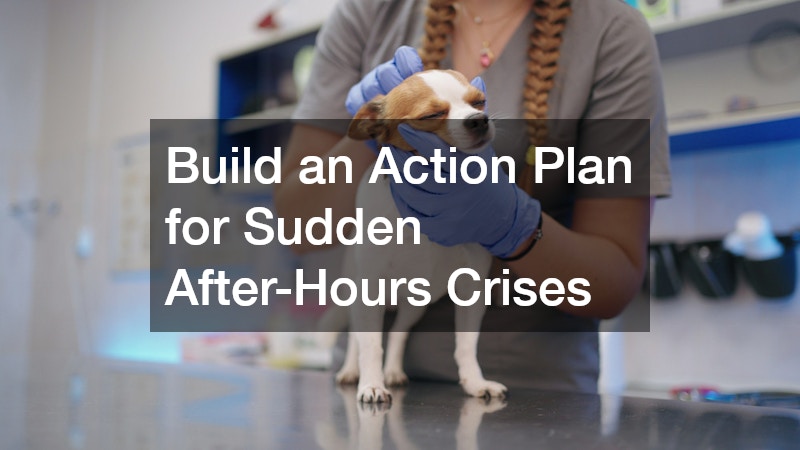
Despite your most rigorous preventative efforts, accidents, sudden illnesses, and traumatic injuries are an unfortunate reality of life. The defining characteristic of a medical crisis is that it rarely happens when it is convenient. Severe allergic reactions, accidental poisonings, and traumatic physical injuries frequently occur late at night, on weekends, or during major holidays when normal businesses are closed. When a crisis strikes at 2:00 AM, the resulting panic can be paralyzing. Building a concrete action plan well before you ever need it is the single most critical step in ensuring your companion survives a sudden medical event.
The first pillar of your crisis action plan is assembling a comprehensive, easily accessible first-aid kit specifically tailored for your companion. In the chaos of an emergency, frantically searching through your bathroom cabinets for a roll of gauze wastes precious, life-saving minutes. Your kit should be stored in a dedicated, clearly labeled container. It should include sterile non-stick bandages, self-adhering wrap, blunt-nosed scissors, a digital rectal thermometer, water-based lubricating jelly, sterile saline eye wash, and a pair of heavy-duty gloves to protect yourself if your pet lashes out in pain. Additionally, you should always keep a fresh bottle of three-percent hydrogen peroxide in the kit, but with a strict caveat: it should only be used to induce vomiting if you are explicitly instructed to do so by a poison control expert, as vomiting certain caustic chemicals can cause fatal damage to the esophagus.
The second pillar of your plan involves logistical mapping. It is a terrifying realization to find that your regular daytime clinic’s phone is going straight to voicemail while your companion is in distress. You must research and locate dedicated 24-hour pet hospitals in your region long before an emergency occurs. Take the time to drive the route to these facilities during the day so you are familiar with the turns, parking lot layout, and entrance locations. Program their contact information, along with the national animal poison control hotline, directly into your mobile phone’s favorites list. Knowing exactly which emergency veterinarians are on call, how long it will take to drive there, and having their number readily available allows you to focus entirely on stabilizing your companion rather than fumbling with internet searches in the dark.
Actionable Steps for Crisis Preparation:
-
Create a portable medical dossier: Keep a physical folder containing a printed summary of your pet’s medical history, current medications, precise dosages, and known drug allergies right next to your first-aid kit.
-
Pre-program GPS coordinates: Save the exact address of the nearest 24-hour trauma center directly into your car’s navigation system or your phone’s map application for instant, one-touch routing.
-
Learn basic stabilization techniques: Take an animal CPR and first-aid certification class to learn how to properly apply a pressure bandage to an arterial bleed, how to perform the Heimlich maneuver on a choking dog, and how to safely transport an animal with a suspected spinal injury.
-
Prepare a muzzle for transport: Even the most gentle, loving animal will bite when they are in excruciating pain or deep shock. Keep a properly sized soft muzzle in your kit and train your pet to wear it comfortably under normal circumstances so it does not cause additional stress during an emergency.
-
Establish a financial safety net: Emergency medicine is incredibly expensive due to the advanced technology and 24/7 staffing required. Secure a comprehensive insurance policy early in your pet’s life, or maintain a dedicated, untouched savings account specifically earmarked for sudden medical crises.
Identify Critical Symptoms That Require Immediate Action
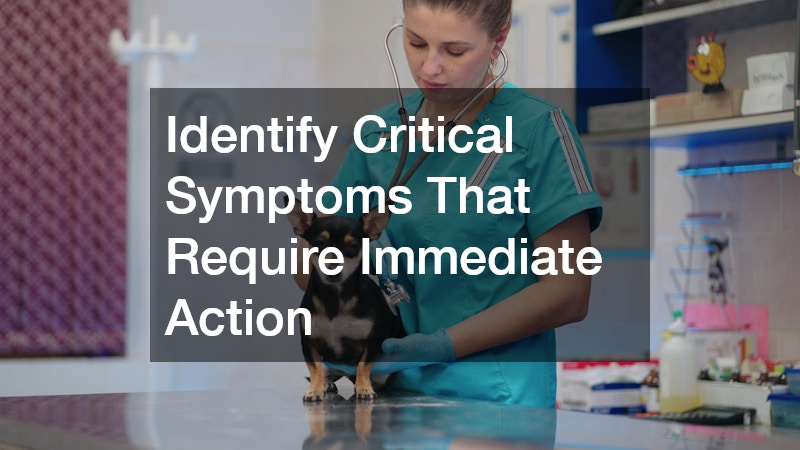
One of the most challenging aspects of pet ownership is the triage process. When your companion seems unwell, you must rapidly determine whether the issue is a minor ailment that can wait for a morning appointment, or a catastrophic event that requires immediate, aggressive intervention. Misjudging the severity of a symptom can have fatal consequences. Therefore, educating yourself on the physiological red flags of an acute medical crisis is absolutely vital for any responsible owner.
Certain conditions are notoriously fast-moving and incredibly lethal. One of the most terrifying examples in large, deep-chested dogs is Gastric Dilatation-Volvulus (GDV), commonly known as bloat. This occurs when the stomach fills with gas and twists violently on its axis, cutting off blood supply to major organs and the lower half of the body. The symptoms are distinct: an distended, hard abdomen, continuous unproductive retching (trying to vomit but producing nothing but white foam), extreme restlessness, and pale gums. GDV is a surgical emergency; an animal can go into irreversible shock and die within hours of the first symptom. Similarly, acute toxicities require immediate action. Ingestion of human foods like grapes, raisins, macadamia nuts, dark chocolate, or the artificial sweetener xylitol (commonly found in sugar-free gum and peanut butter) can cause massive organ failure, seizures, and rapid death.
When you observe these critical symptoms—which also include sudden paralysis of the hind legs, severe labored breathing (characterized by the abdominal muscles heaving), unresponsiveness, or a core temperature exceeding 104 degrees Fahrenheit—you must act immediately. Do not wait to see if the symptoms improve. Call ahead to the facility while you are en route. This allows the staff to prepare an oxygen cage, draw up resuscitation drugs, or assemble a surgical team before you even walk through the doors. By utilizing a dedicated emergency veterinarian service, your pet gains access to advanced, life-saving diagnostics like immediate point-of-care ultrasounds, rapid blood gas analysis, and whole blood transfusions. The highly trained emergency vets staffing these trauma centers have the specialized expertise required to stabilize rapidly crashing patients, manage extreme pain, and perform emergency surgeries in the middle of the night.
Actionable Steps for Identifying Critical Symptoms:
-
Check capillary refill time (CRT): Lift your pet’s lip and press firmly on their gum line until it turns white. Release the pressure; the pink color should return in less than two seconds. If it takes longer, or if the gums are pale, grey, or brick red, the animal is in shock and requires immediate intervention.
-
Monitor respiratory rates: Learn your pet’s resting respiratory rate. If an animal is breathing more than 40 breaths per minute while completely at rest, or if they are sitting with their neck extended and elbows bowed out to maximize air intake, they are in severe respiratory distress.
-
Recognize the signs of urinary blockage: If a male cat is repeatedly visiting the litter box, straining intensely, crying out in pain, and producing only tiny drops of bloody urine or no urine at all, this is a life-threatening urethral obstruction that will cause the bladder to rupture or the kidneys to fail within 24 hours.
-
Identify neurological emergencies: Unexplained stumbling, walking in continuous circles, head pressing against walls, sudden blindness, or cluster seizures (multiple seizures within a 24-hour period) indicate severe neurological trauma or toxicity.
-
Create a toxicity cheat sheet: Print out a comprehensive list of toxic plants (like lilies, sago palms, and oleander), toxic foods, and dangerous household chemicals, and stick it directly to your refrigerator for quick reference.
Break the Parasite Life Cycle on Your Pet
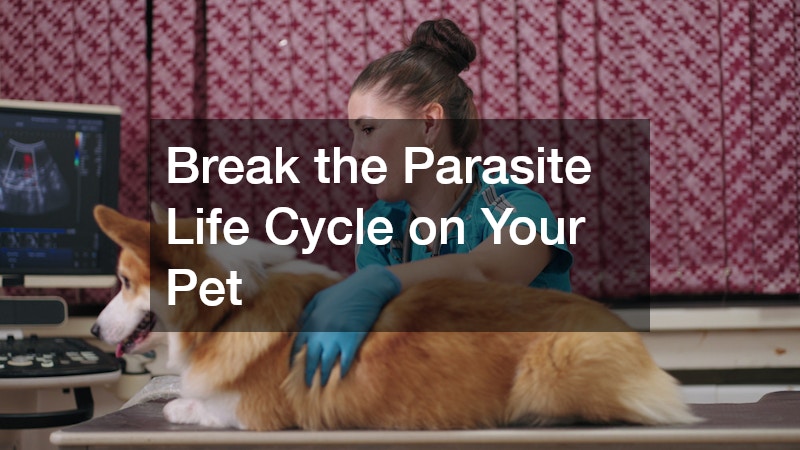
While traumatic injuries and acute diseases demand rapid responses, the slow, insidious invasion of external parasites is an entirely different battle. Ectoparasites are masters of survival, evolutionarily designed to exploit the warmth, blood, and mobility of your animal companions. Ignoring preventative parasite control not only results in an incredibly itchy and miserable pet, but it also exposes them to a host of secondary infections and blood-borne diseases. Successfully managing parasites requires understanding that you are not just fighting the bugs you can see; you are fighting a complex, multi-stage life cycle.
To effectively protect your companion, you must understand how these organisms operate. A single hitchhiker picked up during a brief walk through tall grass or a quick greeting at the dog park can trigger a massive infestation. Adult parasites jump onto the host, feed on their blood, and immediately begin laying dozens of eggs a day. These eggs do not stay on the animal; they are smooth and roll off the coat like salt from a shaker, scattering across your carpets, furniture, and bedding. Within days, these eggs hatch into worm-like larvae that burrow deep into dark, warm crevices, feeding on organic debris. To stop this progression, your first line of defense is aggressive, routine physical inspections. Using a fine-toothed metal comb, you should regularly groom your pet, paying particularly close attention to the dense fur around the base of the tail, the groin, and the back of the neck. You are not just looking for live insects; you are looking for “flea dirt,” which looks like tiny specks of black pepper but is actually the dried blood feces left behind by feeding adults.
When an active infestation is discovered, you must act decisively to treat the animal and halt the breeding cycle. Using over-the-counter shampoos or holistic sprays is rarely sufficient to handle a true outbreak, as these products lack the residual efficacy to kill new hatchlings. Instead, you must utilize fast-acting, veterinary-grade oral or topical medications designed to rapidly kill adult fleas on contact or immediately upon their first bite. By keeping a highly effective, continuous preventative medication in your pet’s system year-round, you effectively turn the animal into a walking, lethal trap. Any adult parasite that jumps onto the host is killed before it has the opportunity to lay eggs, permanently severing the reproductive cycle and protecting the animal from severe flea allergy dermatitis, profound anemia, and the transmission of tapeworms.
Actionable Steps for Pet Parasite Control:
-
Maintain year-round prevention: Parasites do not magically disappear after the first frost. Modern homes provide a perfectly climate-controlled breeding ground year-round, so preventatives must be administered every single month without fail.
-
Confirm correct dosing weight: Always weigh your pet accurately before applying topical or administering oral preventatives, as under-dosing will render the medication completely ineffective and leave the animal vulnerable.
-
Check for tapeworm segments: If your pet is aggressively chewing at their hindquarters, check their stool and the fur around their anus for small, white segments that resemble grains of rice. This is a telltale sign they have ingested an infected parasite and now require an entirely different deworming medication.
-
Bathe before applying topicals, not after: If using a liquid topical preventative, bathe the animal first, ensure they are completely dry, and then apply the medication. Bathing them immediately after application can strip the active ingredients from the lipid layer of the skin.
-
Treat every animal in the house: If you discover a parasite on one pet, you must aggressively treat every single dog, cat, and ferret in the household simultaneously, regardless of whether you see bugs on them, to prevent cross-infestation.
Treat Your Home Environment to Prevent Re-infestation
Treating the animal is only the first phase of a much larger battle. One of the most frustrating and disheartening experiences for a pet owner is diligently treating their companion, seeing a brief respite from the scratching, only to have a massive resurgence of parasites explode three weeks later. This occurs because the vast majority of a parasite population—often estimated at 95 percent—does not live on the animal at all. The true invasion is happening silently in the environment. The eggs, larvae, and pupae are embedded in your carpets, resting on your baseboards, and woven into the fabric of your couch.
The pupal stage is the most resilient and difficult phase of the life cycle to defeat. After the larval stage, the parasite spins a sticky, impenetrable cocoon around itself. Within this protective casing, the pupae can lie dormant in the fibers of your home for weeks or even months, entirely impervious to standard chemical treatments and bug bombs. They wait for the specific environmental triggers of heat, carbon dioxide, and the physical vibrations of footsteps to signal that a warm-blooded host is nearby before they hatch and strike. To combat this hidden army, you must wage a war of aggressive, mechanical environmental hygiene. You must begin by gathering every piece of pet bedding, every throw blanket on the couch, and any soft toys, and laundering them in the hottest water setting available, followed by a high-heat drying cycle. Furthermore, you must implement a rigorous, daily vacuuming protocol. The physical vibration of the vacuum cleaner’s beater bar forces the dormant pupae to hatch, while the suction removes the eggs, larvae, and organic debris they feed on.
However, mechanical cleaning is sometimes not enough. If an infestation has gone unnoticed for months, the sheer volume of eggs deposited deep beneath heavy furniture, underneath hardwood floorboards, and into the sub-layers of thick carpeting can overwhelm a household’s cleaning capabilities. When diligent laundering, daily vacuuming, and treating all household pets fails to stop the cycle of re-infestation after several weeks, it is time to escalate your response. In these severe scenarios, the safest and most effective course of action is to temporarily relocate your family and animals and coordinate with professionals for comprehensive residential pest removal. These experts possess the necessary knowledge to safely apply targeted insect growth regulators (IGRs) that penetrate deep into the environment to sterilize remaining eggs and larvae, ensuring that your home is completely reset and returned to a safe, sanitary, and comfortable state.
Actionable Steps for Environmental Eradication:
-
Vacuum aggressively and dispose safely: Vacuum all carpets, rugs, upholstered furniture, and along baseboards daily. Crucially, you must immediately empty the vacuum canister or throw away the bag in an outdoor trash receptacle, as eggs will happily hatch inside a warm vacuum closet.
-
Wash human bedding frequently: If your pets sleep in your bed, your mattress and sheets are a primary depository for parasite eggs. Strip and wash all human bedding in hot water weekly during an active outbreak.
-
Treat the outdoor yard: Focus on dark, damp, shaded areas of the yard where your pet likes to rest, such as under decks or low-hanging bushes. Rake up organic debris, keep the grass cut short to allow sunlight to dry out the soil, and consider utilizing pet-safe outdoor nematode treatments to consume larvae in the soil.
-
Clean pet transport vehicles: Do not forget to thoroughly vacuum the interior of your car, especially the fabric seats, floor mats, and any soft travel crates, as these are frequent sites of hidden re-infestation.
-
Utilize insect growth regulators (IGRs): If utilizing at-home environmental sprays before calling professionals, ensure the product specifically contains an IGR (like methoprene or pyriproxyfen) to halt the development of eggs and larvae, rather than just an adulticide that only kills mature insects.
